



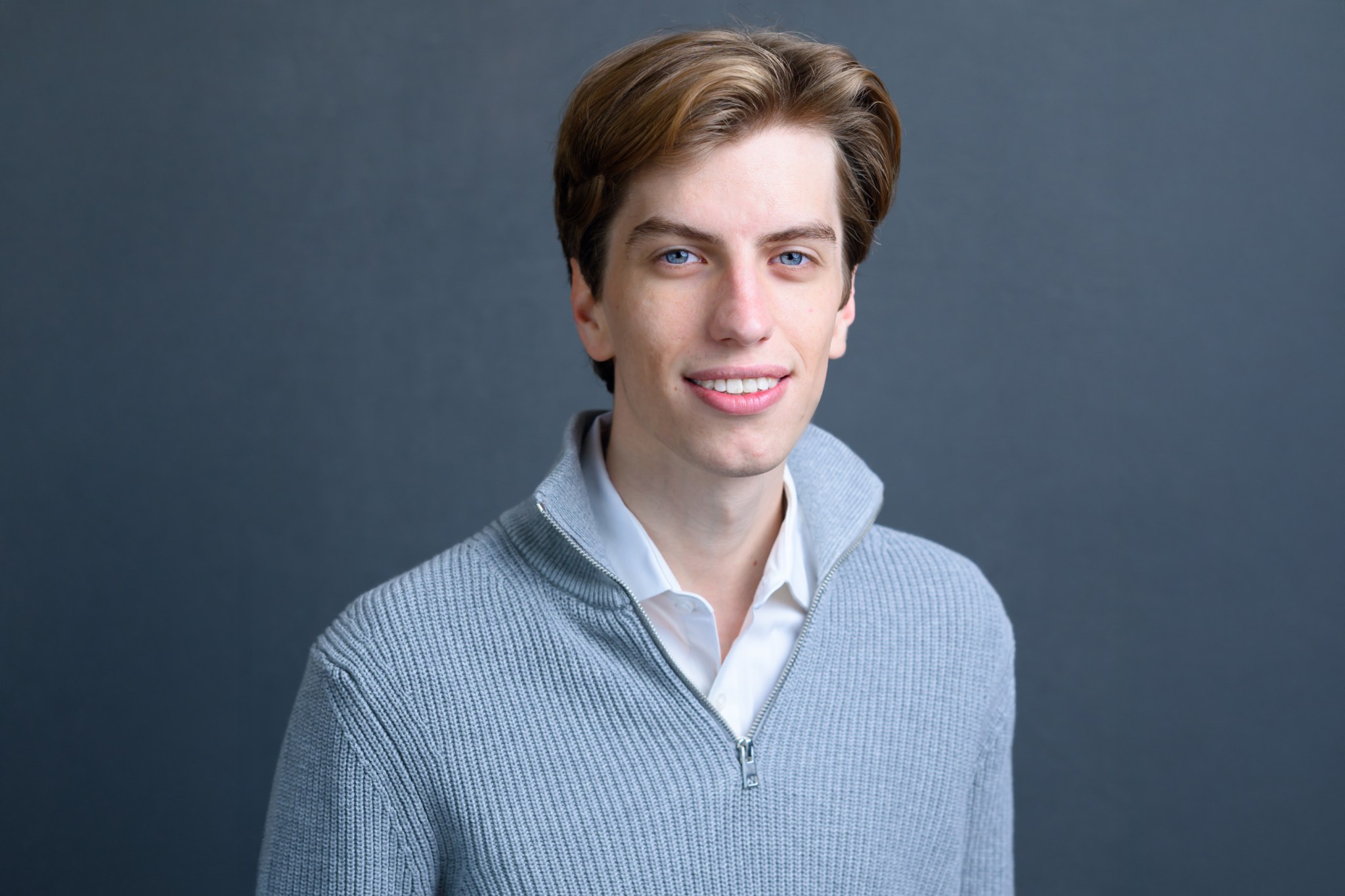
Welcome to Eye on AI, with AI reporter Sharon Goldman. On this version…the rise of Leopold Aschenbrenner, a 23-year-old AI researcher turned hedge fund supervisor…the IMF and the Financial institution of England each warn of the hazards of a monetary bubble round AI…and figures that present enterprise AI adoption is rising considerably.
The refrain of warnings about an AI bubble is rising louder. Yesterday, the IMF and the Financial institution of England turned the most recent to warn that world markets may face bother if investor enthusiasm for AI takes a dive.
But in Silicon Valley and past, that enthusiasm reveals no signal of slowing. Traders aren’t simply backing firms anymore. They’re betting that synthetic basic intelligence (AGI)—AI methods as succesful as, or extra succesful than, people—is true across the nook, with huge rewards for many who get in early.
Few tales seize that higher than the rise of 23-year-old Leopold Aschenbrenner, a former OpenAI researcher who turned well-known in AI circles for penning a monograph in regards to the implications of AGI, after which launched a hedge fund based mostly largely on that monograph that now manages greater than $1.5 billion. I used to be so fascinated by Aschenbrenner that I spent the previous few weeks digging into his story. The result’s a Fortune profile based mostly on interviews with greater than a dozen of his buddies, former colleagues, and acquaintances, in addition to buyers and Silicon Valley insiders. (Aschenbrenner declined to talk to me.)
Who’s Leopold Aschenbrenner? As I write within the story:
A Columbia valedictorian at age 19, [Aschenbrenner] hung out on the philanthropy arm of Sam Bankman-Fried’s now-bankrupt FTX cryptocurrency alternate earlier than a controversial 12 months at OpenAI, the place he was in the end fired. Then, simply two months after being booted from probably the most influential firm in AI, he penned an AI manifesto that went viral — even incomes reward from Ivanka Trump on social media — and used it as a launching pad for a hedge fund that now manages greater than $1.5 billion. That’s modest by hedge-fund requirements however outstanding for somebody barely out of school. Simply 4 years after graduating, Aschenbrenner is holding personal discussions with tech CEOs, buyers, and policymakers who deal with him as a type of prophet of the AI age.
It’s an astonishing ascent — one which has many asking not simply how this German-born early-career AI researcher pulled it off, however whether or not the hype surrounding him matches the truth. To some, Aschenbrenner is a uncommon genius who noticed the second — the approaching of humanlike AGI, China’s accelerating AI race, and the huge fortunes awaiting those that transfer first — extra clearly than anybody else. To others, together with a number of former OpenAI colleagues, he’s a fortunate novice with no finance monitor report, repackaging hype right into a hedge-fund pitch.
Reporting the story, what struck me most is how perception itself has change into a type of capital — how persons are actually investing in a worldview about the place AI is heading. That perception interprets into actual cash: billions flowing into chips, knowledge facilities, and hedge funds constructed not simply on monetary fashions, however on the conviction that AGI shouldn’t be solely inevitable — however imminent.
Whether or not or not buyers like Aschenbrenner are fueling the bubble is irrelevant. His rise reveals how perception — in AGI, its timing, its inevitability — has change into probably the most highly effective forces within the AI economic system. Corporations like OpenAI and Anthropic are making their very own variations of the identical guess — that AGI is coming quickly, and that perception is value billions.
Aschenbrenner’s fund is actually the financial-market expression of that religion — one investor within the fund advised Fortune that Leopold mentioned that “AGI was going to be so impactful to the worldwide economic system that the one option to totally capitalize on it was to precise funding concepts in probably the most liquid markets on the earth.”
I’ll admit, the thought of “expressing” a perception by means of a hedge fund was new to me as a tech reporter extra used to mannequin weights than portfolio weightings. However it did assist me make sense of a number of the bubbly fizz coursing by means of the AI world proper now — and why so many are beginning to fear it may all burst.
Learn the full story here. With that, right here’s extra AI information.
Sharon Goldman
sharon.goldman@fortune.com
@sharongoldman
FORTUNE ON AI
AI isn’t in a bubble—the cash (and the hype) are real, these analysts say – by Jim Edwards
How business leaders can survive a ‘phenomenal’ AI bubble – by Alyson Shontell
Section 230 protected social media companies from legal responsibility for misinformation. AI chatbots could be about to change that – by Beatrice Nolan
AI IN THE NEWS
OpenAI and Anthropic are contemplating utilizing investor funds to settle potential claims from multibillion-dollar lawsuits. Based on the Financial Times, OpenAI and Anthropic are exploring whether or not they may use investor funds to assist cowl potential liabilities from a wave of multibillion-dollar lawsuits, as conventional insurers hesitate to supply full safety towards AI-related dangers. OpenAI reportedly labored with insurance coverage dealer Aon to safe as much as $300 million in protection for rising AI dangers, although the true determine could also be decrease—and in any case, far wanting the potential damages. Insurance coverage executives advised the FT that the business lacks the capability to deal with the type of systemic, large-scale losses AI fashions may set off, reflecting the sector’s broader unease about underwriting the unprecedented dangers posed by generative AI suppliers.
IMF and BoE warn AI growth dangers ‘abrupt’ inventory market correction. The Financial Times additionally reported that each the Worldwide Financial Fund and the Financial institution of England have warned that world inventory markets may face a sudden correction as the bogus intelligence growth drives valuations to ranges paying homage to the dotcom bubble. IMF managing director Kristalina Georgieva cautioned that bullish sentiment about AI’s productiveness potential may “flip abruptly,” threatening world development—notably in creating economies. The BoE’s Monetary Coverage Committee equally famous that U.S. inventory valuations are approaching these seen on the peak of the 2000 tech crash, pointing to an “elevated danger of a pointy market correction.” Nonetheless, figures resembling Nvidia’s Jensen Huang and San Francisco Fed president Mary Daly argued that at the moment’s AI surge differs from the dotcom period, fueled by wealthier tech giants and productive funding fairly than hypothesis.
Why America builds AI girlfriends and China makes AI boyfriends. I assumed this was a captivating piece in an important Substack e-newsletter, written by a number of contributors, known as ChinaTalk. Within the article, an Oxford researcher named Zilan Qian explores why America’s AI “companions” are typically girlfriends whereas China’s are boyfriends—and what that claims about each societies. The U.S. market, dominated by apps catering to younger males, displays a mixture of manosphere tradition, loneliness, and the monetization of sexualized AI fantasy. In distinction, China’s booming “AI boyfriend” business largely targets city girls amid falling marriage charges and authorities anxiousness over start declines. Qian argues that these gendered tendencies reveal how tradition, regulation, and demographics form not simply who builds AI—however what sorts of emotional worlds we construct with it.
AI CALENDAR
Oct. 6-10: World AI Week, Amsterdam
Oct. 21-22: TedAI San Francisco. Apply to attend right here.
Nov. 10-13: Internet Summit, Lisbon.
Nov. 26-27: World AI Congress, London.
Dec. 2-7: NeurIPS, San Diego
Dec. 8-9: Fortune Brainstorm AI San Francisco. Apply to attend here.
EYE ON AI NUMBERS
44%
That is what number of U.S. companies now pay for AI instruments, up from simply 5% in 2023, in line with Ramp statistics offered within the newest State of AI Report by AI investor Nathan Benaich and Air Road Capital.
Based on the report, common contracts have reached $530,000, and AI-first startups are rising 1.5× sooner than their friends – indicators that the enterprise of AI has “lastly caught up with the hype.”
