



Because the Center East broadly welcomes a ceasefire in the Israel-Hamas war in Gaza, Iran finds itself at considered one of its weakest moments since its 1979 Islamic Revolution.
Tehran has operated its self-described “Axis of Resistance”over a number of many years, supporting militant teams and nations allied with it towards Israel and america. However as Israel bombed the Gaza Strip, it additionally turned its crosshairs towards prime leaders overseas in militant teams like Hamas, Lebanon’s Hezbollah and even the highest echelon inside Iran’s navy and nuclear program — killing many and disrupting their capability to battle again.
As President Donald Trump prepares for a Center East journey that doubtless will see him praised by Israel and Arab nations, Iran received’t be on the desk because it nonetheless struggles to recover from June’s 12-day war.
How Tehran’s theocracy responds within the weeks and months forward, whether or not which means lashing out or attempting to rebuild its hobbled financial system at residence, will likely be essential.
“Undoubtedly it is a not a proud second for Iran,” stated Ali Vaez, the Iran challenge director on the Worldwide Disaster Group. “Its alliance system within the area is in ruins however it doesn’t imply that the ‘Axis of Resistance’ is not any extra.”
‘Like a bankrupt gambler’
Iranian state media has sought to explain the Gaza ceasefire as a victory for Hamas, regardless of the battle destroying the Gaza Strip and killing over 67,000 Palestinians, in accordance with Gaza’s Well being Ministry, which doesn’t differentiate between civilians and combatants however says round half the useless are girls and kids.
Iran’s International Ministry welcomed “any choice … that ensures halting the genocide of Palestinians.” Iranian International Minister Abbas Araghchi reiterated that on Saturday, telling state tv that Hamas determined to just accept the deal and that Tehran has “all the time supported any plan, any motion that led to the halt of crimes, genocide” by Israel towards the folks of Gaza.
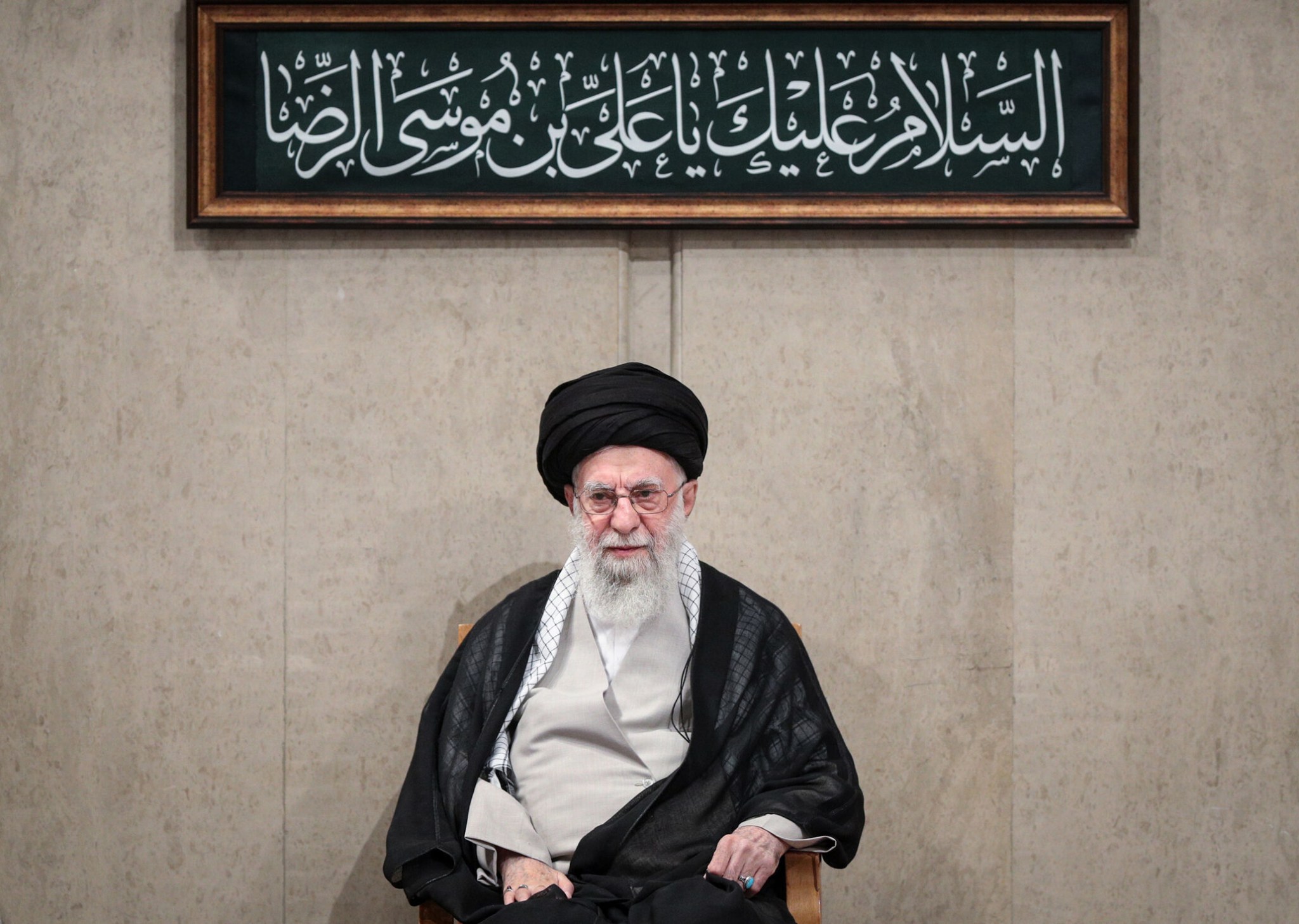
However maybe extra tellingly, an adviser to Iran’s 86-year-old Supreme Chief Ayatollah Ali Khamenei steered the ceasefire would solely result in battle elsewhere within the area.
“The beginning of the ceasefire in Gaza will be the behind-the-scenes finish of the ceasefire elsewhere!” Ali Akbar Velayati, an adviser to Khamenei, wrote on X, referencing Hezbollah, Yemen’s Iranian-backed Houthi rebels and Iraq.
The worry of additional Israeli strikes, significantly on Iran, stays acute within the public’s thoughts as a lot of Iranian air defenses likely were destroyed by Israel in June. Khamenei has not resumed his standard routine of weekly speeches to audiences. With out rationalization, Iran averted holding a significant navy commemoration marking the tip of the Iran-Iraq battle in September, which generally sees prime officers watch drones and missile launchers parade previous them.
Iran’s economy also has suffered under international sanctions and as international power costs fall.
“Iran has all the time targeted on its pursuits, we don’t have sources anymore, our financial system has weakened,” stated Tehran-based analyst Saeed Leilaz. “Our assist to Hamas was a response to U.S. to divert conflicts from our borders.”
Others are much less optimistic.
“Iran is sort of a bankrupt gambler after successful some small cash within the first rounds,” stated Amir Kazemi, a college scholar in Tehran. “When Hamas attacked Israel, Iran was joyful about it. However now, after the ceasefire, Iran finds nothing in its pocket.”
Mideast seems to be far totally different
Within the fast years after Iran’s revolution, its theocratic authorities sought to export its Shiite revolutionary ideology extra extensively within the Center East. That morphed following its devastating Nineteen Eighties battle with Iraq into extra of an effort to offer a stage of deterrence as Arab nations round it bought subtle American bombs, warplanes and tanks that Tehran couldn’t entry resulting from sanctions.
The U.S. navy’s presence throughout the Persian Gulf additionally expanded following the 1991 Gulf War, with Arab nations granting basing rights to American forces to Tehran’s fixed anger.
The height of the “Axis of Resistance” got here within the chaotic years after the 2003 U.S.-led invasion of Iraq and Yemen’s subsequent collapse right into a civil battle. Then, it might depend on Hezbollah, Syrian autocrat Bashar Assad, the Houthis, Iraqi militant teams and even Hamas — a Sunni militant group.
At the moment, the Mideast seems to be far totally different.
In Syria, rebels overthrew Assad last year, Israeli strikes killed Hezbollah and Hamas’ prime leaders, whereas Iraqi militant teams light into the background. Yemen’s Houthis, whereas nonetheless able to launching assaults on Israel and commercial shipping in the Red Sea corridor, discover themselves now focused by more and more exact Israeli strikes.
And the 12-day battle in June left Iran doubtless not enriching uranium for its nuclear program, which the West long has worried could be weaponized.
‘Collapsing regional clout’
Iran, in the meantime, has but to obtain any main assist from both China or Russia, regardless of offering Beijing with doubtless discounted oil and Moscow with the drones it makes use of in its battle on Ukraine. Tehran has additionally shied away from confronting women who are increasingly abandoning the hijab, or headscarf, as an alternative executing prisoners it already holds at a rate unseen in decades.
“The ceasefire is reflective of Tehran’s collapsing regional clout following the unraveling of its long-powerful ‘Axis of Resistance’ since 2024,” stated Ali Fathollah-Nejad, the director of the Berlin-based Heart for Center East and World Order. “The ceasefire will free Israeli navy capacities that will now be used towards Iranian pursuits — whether or not in Lebanon towards Hezbollah or straight towards Iran.”
For his half, Trump seized on Iran accepting the ceasefire as “terrific” information. Nonetheless, there’s been no transfer towards renewed public negotiations with Tehran over its nuclear program.
“Time isn’t on Iran’s facet however their downside is nobody is basically giving them an exit ramp,” Vaez stated. However whether or not Tehran would take the ramp additionally stays in query as its leaders nonetheless debate what flip to now take.
