



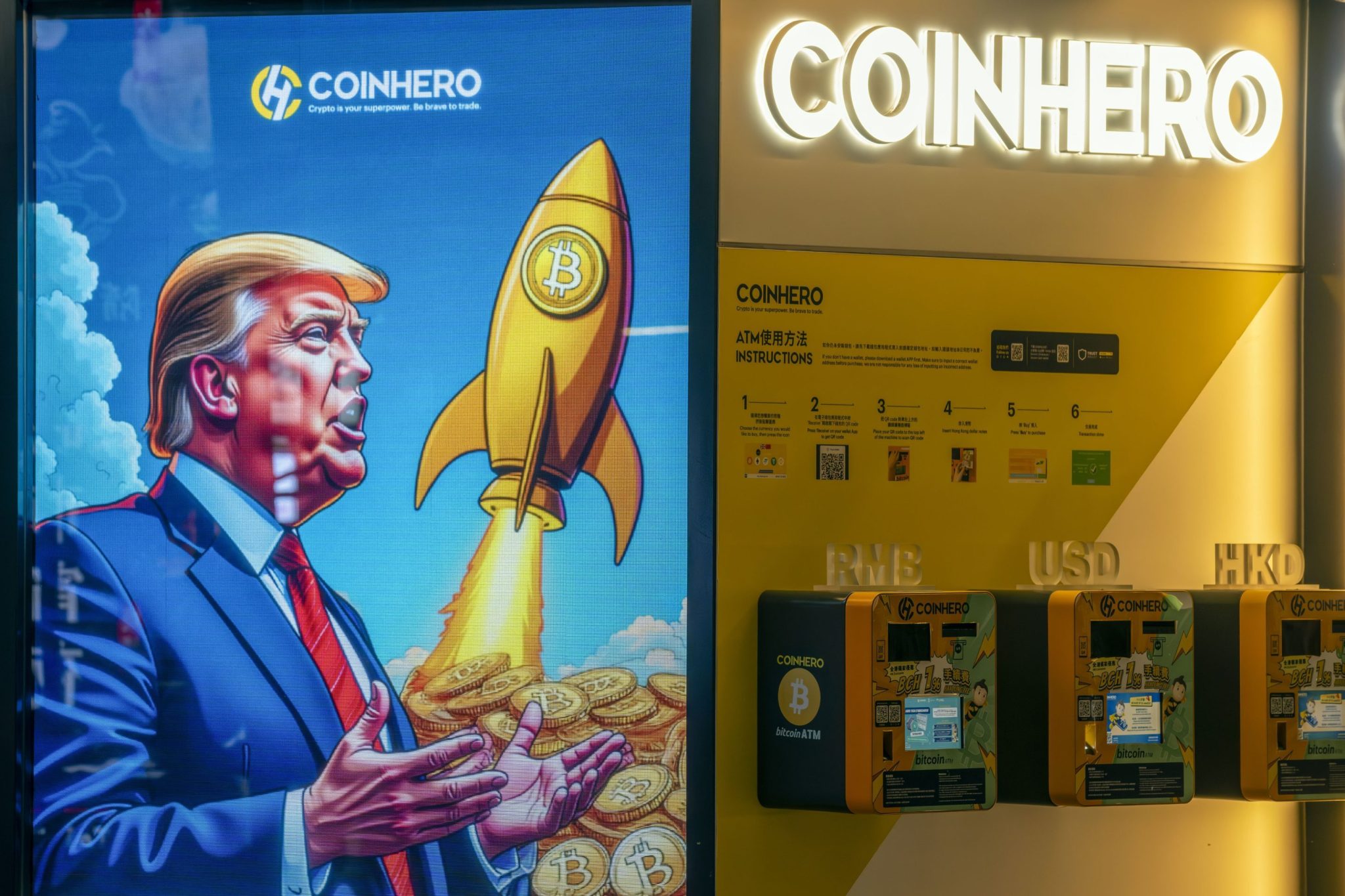
Donald Trump has spearheaded a world push by governments to determine a strategic crypto reserve utilizing property seized from criminals, betting that the rising worth of tokens like Bitcoin might help total financial progress. However how a lot is theoretically on the market for the taking?
All informed, greater than $75 billion, in accordance with analysis by blockchain analytics agency Chainalysis Inc. That determine tracks the quantity of crypto tied to illicit exercise that’s sitting “on chain”—that means in a web-based pockets or platform—and inside attain of legislation enforcement.
“This brings asset forfeiture potential to a very totally different stage to what we’ve seen previously,” Jonathan Levin, chief government officer of Chainalysis, stated of the findings in an interview. “It does change how nations take into consideration that.”
Trump signed an executive order in March ordering the creation of a strategic Bitcoin reserve and digital asset stockpile, which might see the U.S. authorities hold maintain of any cryptocurrencies seized from criminals and forfeited to its management. The U.S. already has an estimated $15 billion to $20 billion in forfeited Bitcoin, Treasury Secretary Scott Bessent stated in August.
Different nations the place lawmakers are debating or have already established strategic crypto reserves embody El Salvador, Bhutan, the Czech Republic and Sweden, in addition to some U.S. states. Unofficial stockpiles of confiscated cryptoassets are additionally rising, like within the U.Okay., the place authorities seized round 61,000 Bitcoin from a West London home in 2018. That’s now price virtually $7 billion and represents one of many largest cryptocurrency hauls legislation enforcement have recovered anyplace on this planet.
Illicit entities maintain almost $15 billion in on-chain balances in 2025, whereas wallets downstream from these entities—those that have acquired no less than 10% of their complete funds from felony sources—maintain over $60 billion. Directors and distributors for darknet marketplaces, a profitable goal for legislation enforcement, management greater than $40 billion, Chainalysis discovered.
Bitcoin makes up about 75% of the $15 billion held by illicit actors straight. Mixed with holdings of Ether and stablecoins, that represents a 359% surge from balances noticed 5 years in the past. In the meantime the quantity of crypto held by downstream wallets has grown equally, with darknet market administrator and vendor wallets exceeding a compound annual progress fee of 200%.
Whether or not or not authorities will really get their fingers on that $75 billion is one other matter. Whereas efforts by legislation enforcement to crack down on crypto crime have stepped up considerably lately, the ability set, worldwide cooperation and funding required to determine, hint and seize digital property from criminals stays a troublesome ask.
In some jurisdictions when cryptoassets are seized, not all the cash goes straight to the federal government—some could be held again to finance extra restoration efforts by legislation enforcement, to repay victims or to prosecute criminals. An uptick in seizures might go some technique to decreasing the friction and time to takes to hold out investigations, Levin stated, whereas nonetheless benefiting reserve plans.
“It’s actually fascinating to see whether or not this may change coverage on how that cash will get utilized, and whether or not you do strategic reserve or whether or not you reinvest it into discovering extra of those felony proceeds and disrupting extra felony networks,” he added.
