


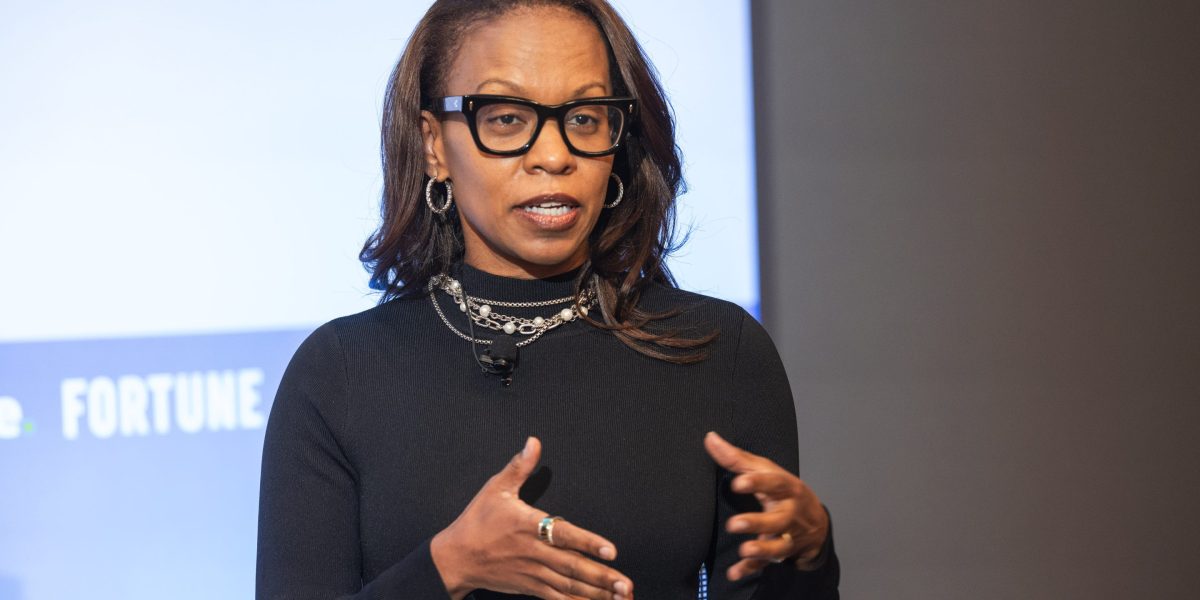
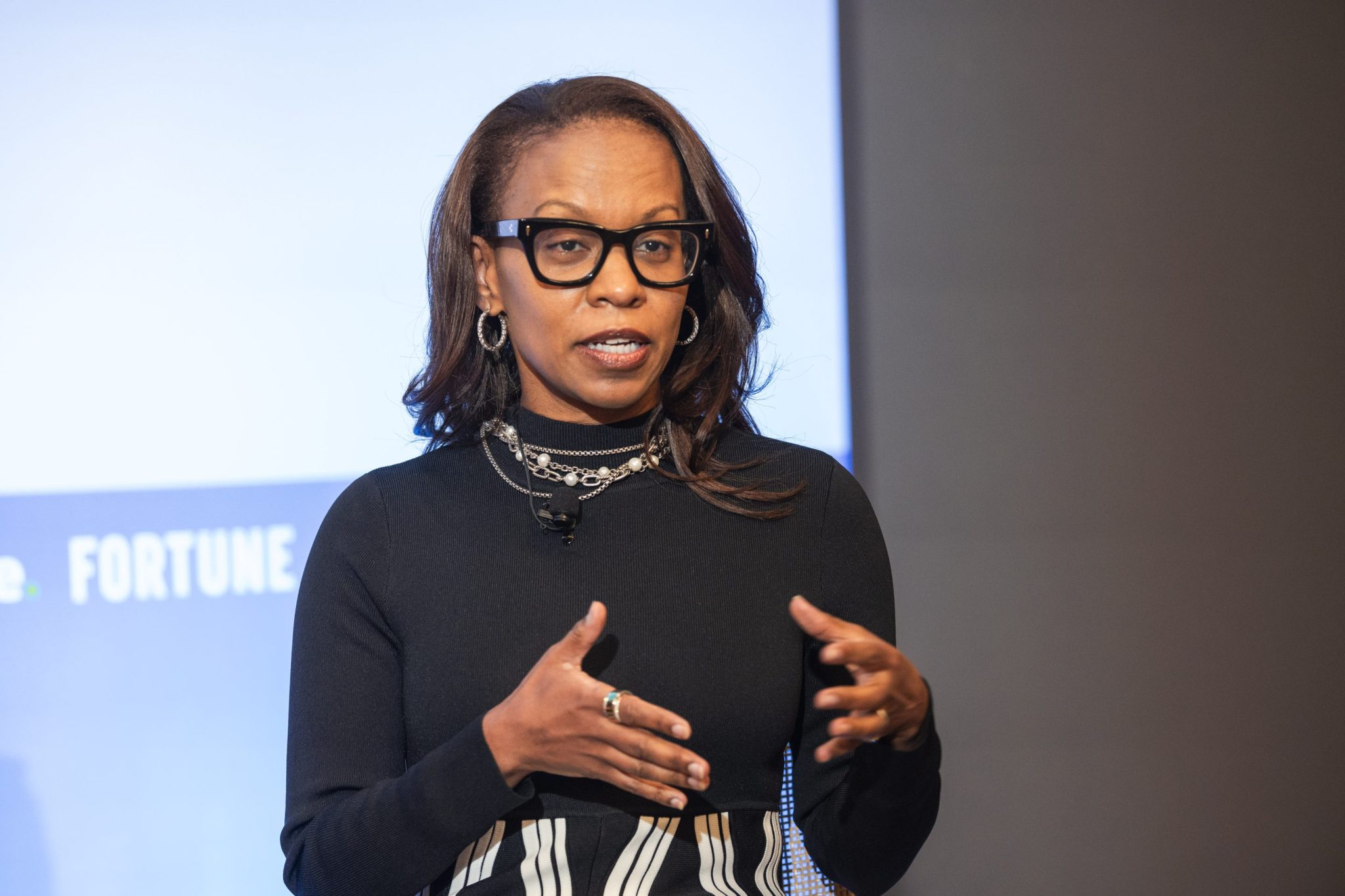
You’ll be able to’t be in well being with out being in ladies’s well being. That was the message leaders from Deloitte, Acadia Prescribed drugs, Susan G. Komen, and the Alice L. Walton Faculty of Drugs shared at Fortune’s Most Powerful Women Summit final week.
Dr. Kulleni Gebreyes, principal at Deloitte and vice chair and U.S. life sciences & well being care business chief, stated that ladies’s well being ought to be seen as human well being. “It’s not a distinct segment market, it’s not arts and crafts, it’s higher than 50% of the inhabitants of the world. Anybody who tells you in a different way has an financial blind spot.”
She famous that information is the brand new infrastructure and belief is the brand new foreign money. Ladies need to understand how their information is getting used and the way it will drive higher outcomes. “Knowledge isn’t simply your [electronic health record] info. Six out of 10 individuals who use wearables are ladies. And solely 20% of ladies who use a digital platform say that it’s custom-made for them,” Dr. Gebreyes stated.
Ladies are additionally ignored with regards to pharmaceutical improvement, argued Catherine Owen Adams, CEO of Acadia Prescribed drugs, who highlighted the vital want for ladies’s management within the area. “There’s quite a lot of systemic bias that we have to perceive and concentrate on, so that ladies’s well being pharmaceutical innovation and medical well being innovation can grow to be infused with a ladies’s perspective,” Adams stated. She pointed to stark disparities: “Ladies have twice the quantity of hysteria and despair that males do, 60% of Alzheimer’s sufferers are ladies, one in 5 ladies have a despair or nervousness occasion yearly that requires remedy, and but lower than 30% of scientific trials in these areas are on ladies.”
Susan G. Komen, the breast most cancers group, is making an attempt to shut that hole. It’s second-largest funder of breast most cancers drug analysis after the U.S. authorities.
Paula Schneider, former president and CEO and now honorary vice chair of Susan G. Komen, cited the work of MIT’s Regina Barzilay for example of a breast most cancers breakthrough. Barzilay is utilizing AI to learn mammograms and detect 20% extra cancers than the human eye. “As soon as this turns into a regular of care, for ladies who do get their mammograms (which is simply about 50%, by the best way), we will diagnose breast most cancers at stage 0 or stage 1, versus phases 2-4, which is able to dramatically change the outcomes of breast most cancers,” Schneider stated.
Sharmila Makhija, founding dean and CEO of the Alice L. Walton Faculty of Drugs, is on the frontlines of educating a brand new technology of practitioners to reap the benefits of well being care innovation whereas administering whole-person care. College students start scientific apply inside their first three months and are skilled in finance, fee reform, coverage making, and extra. “We wish college students to hearken to what a affected person is saying and handle it. It’s not, ‘What’s the matter with you, however what issues to you?’” Dr. Makhija stated.
Dr. Gebreyes stated we have to reframe the entire dialog round well being. As an alternative of being “for him, by him, for her, by her, or for us, by us,” she stated, “I feel there’s an actual alternative to make it for us and by us.”
