



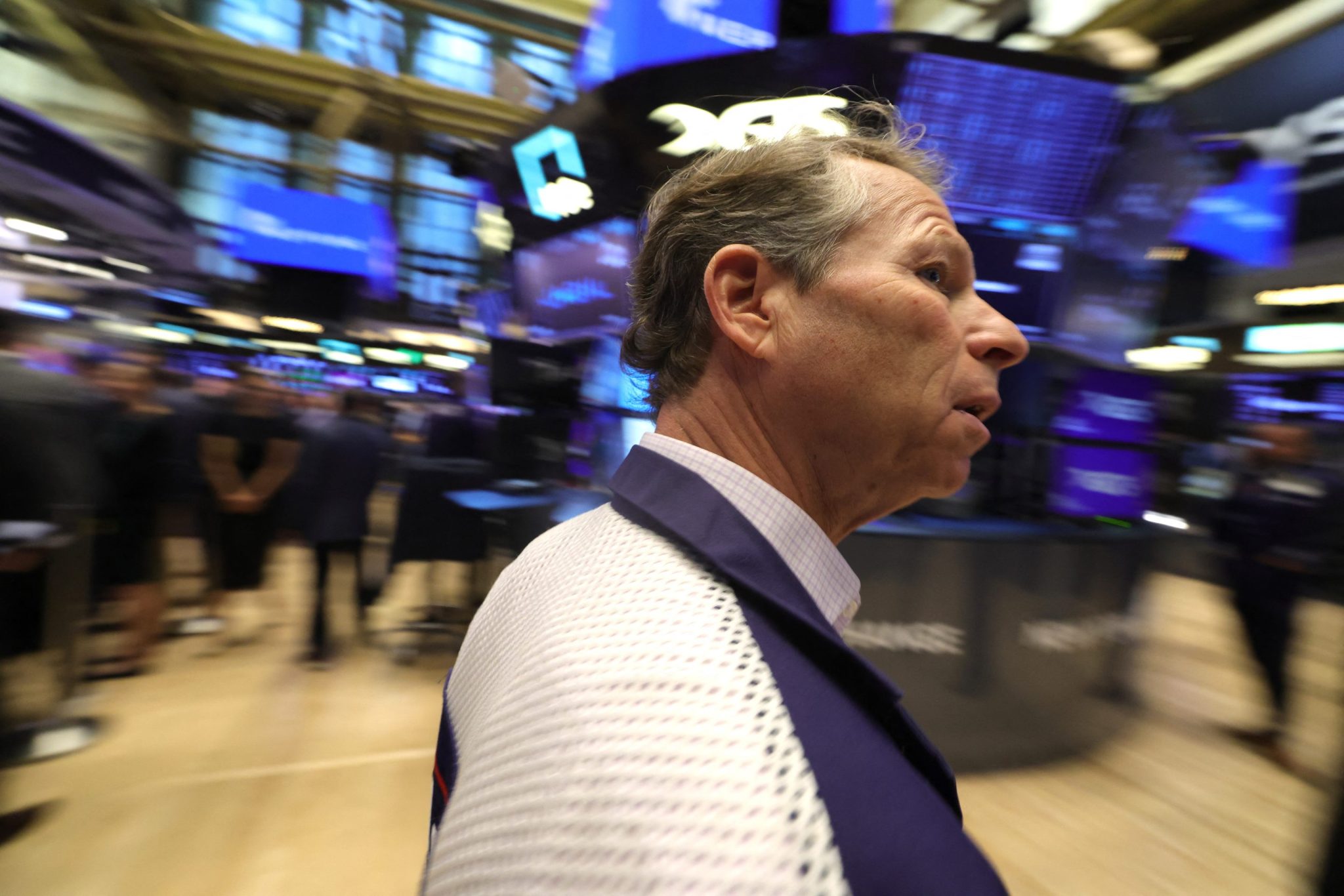
The S&P 500 sank 2.7% in its worst day since April 10. The Dow Jones Industrial Common dropped 878 factors, or 1.9%, and the Nasdaq composite fell 3.6%.
Shares had been heading for a slight achieve within the morning, till Trump took to his social media platform and stated he’s contemplating “an enormous enhance of tariffs” on Chinese language imports. He’s upset at restrictions China has placed on exports of its rare earths, that are supplies which can be vital for the manufacturing of every little thing from shopper electronics to jet engines.
“Now we have been contacted by different Nations who’re extraordinarily offended at this nice Commerce hostility, which got here out of nowhere,” Trump wrote on Fact Social. He additionally stated “now there appears to be no purpose” to satisfy with China’s chief, Xi Jinping, after earlier agreeing to do so as a part of an upcoming journey to South Korea.
Trump’s sudden announcement of recent tariffs recalled April’s large swoon in inventory markets, when the president introduced “Liberation Day” with a listing of “reciprocal tariffs” for numerous international locations worldwide, sending global markets plunging. Inside simply 4 days, the S&P 500 fell about 12% and the Dow Jones Industrial Common misplaced practically 4,600 factors, however the U.S. indexes regained all the lost ground within a month or so because the tariffs performed out very in a different way from Trump’s announcement.
Nonetheless, as of October, Federal Reserve Governor Chris Waller, who confirmed to CNBC that he had a “nice interview” as a possible substitute for Chairman Jerome Powell, revealed how the tariffs had played out so far: value will increase for higher-income shoppers as tariffs have been handed by means of, and corporations swallowing the fee for any lower-income and price-sensitive shopper. Moody’s Analytics found that just about 50% of shopper spending within the economic system got here from the highest 10% of wealthiest People, in the meantime, and the tariff income is “very significant,” in line with Apollo Global Management chief economist Torsten Slok.
The ratchet greater in tensions between the world’s largest economies led to widespread drops throughout Wall Road, with roughly six out of each seven shares throughout the S&P 500 falling. Practically every little thing weakened, from Massive Tech firms like Nvidia and Apple to shares of smaller firms trying to get previous uncertainty about tariffs and commerce.
The market might have been primed for a slide. U.S. shares have been already going through criticism that their costs had shot too excessive following the S&P 500’s practically relentless 35% run from a low in April. The index, which dictates the actions for a lot of 401(ok) accounts, remains to be close to its all-time high set earlier within the week.
Critics say the market looks too expensive after costs rose a lot quicker than company income. Worries are particularly high about companies in the artificial-intelligence industry, the place pessimists see echoes of the 2000 dot-com bubble that imploded. For shares to look inexpensive, both their costs have to fall, or firms’ income have to rise.
Levi Strauss dropped 12.6% for one of many market’s bigger losses, although it reported a stronger revenue for the most recent quarter than analysts anticipated.
Its forecast for revenue over the total 12 months was additionally inside vary of Wall Road’s estimates, however the denims and clothes firm may merely be going through the problem of heightened expectations after an enormous run. Its inventory value got here into the day with a surge of practically 42% for the 12 months to date.
All advised, the S&P 500 fell 182.60 factors to six,552.51. The Dow Jones Industrial Common dropped 878.82 to 45,479.60, and the Nasdaq composite sank 820.20 to 22,204.43.
A few of Friday’s strongest motion was within the oil market, the place the value of a barrel of benchmark U.S. crude sank 4.2% to $58.90.
It fell as a ceasefire between Israel and Hamas came into effect in Gaza. An finish to the battle may take away worries about disruptions to grease provides, which had saved crude’s value greater than it in any other case would have been.
Losses accelerated following Trump’s tariff risk, which may gum up international commerce and lead the economic system to burn much less gasoline. Brent crude, the worldwide normal, dropped 3.8% to $62.73 per barrel.
Within the bond market, the yield on the 10-year Treasury sank to 4.05% from 4.14% late Thursday.
It had already been decrease earlier than Trump made his threats, as a report from the College of Michigan steered that sentiment amongst U.S. shoppers stays within the doldrums.
“Pocketbook points like excessive costs and weakening job prospects stay on the forefront of shoppers’ minds,” in line with Joanne Hsu, director of the Surveys of Customers. “Presently, shoppers don’t anticipate significant enchancment in these components.”
The job market has slowed so much that the Federal Reserve minimize its principal rate of interest final month for the primary time this 12 months. Fed officers have penciled in additional cuts by means of subsequent 12 months to offer the economic system extra respiratory room. However Chair Jerome Powell has additionally stated they could change course if inflation stays high. That’s as a result of decrease rates of interest can push inflation even greater.
One doubtlessly encouraging sign from the College of Michigan’s preliminary survey stated shoppers’ expectations for inflation within the coming 12 months edged right down to 4.6% from 4.7% the month earlier than. Whereas that’s nonetheless excessive, the course of change may assist the Fed and restrict upward strain on inflation.
In inventory markets overseas, indexes fell throughout a lot of Europe and Asia.
Hong Kong’s Dangle Seng fell 1.7%, and France’s CAC 40 dropped 1.5% for 2 of the larger strikes. However South Korea’s Kospi leaped 1.7% after buying and selling reopened following a vacation.
___
AP Author Teresa Cerojano contributed.
