



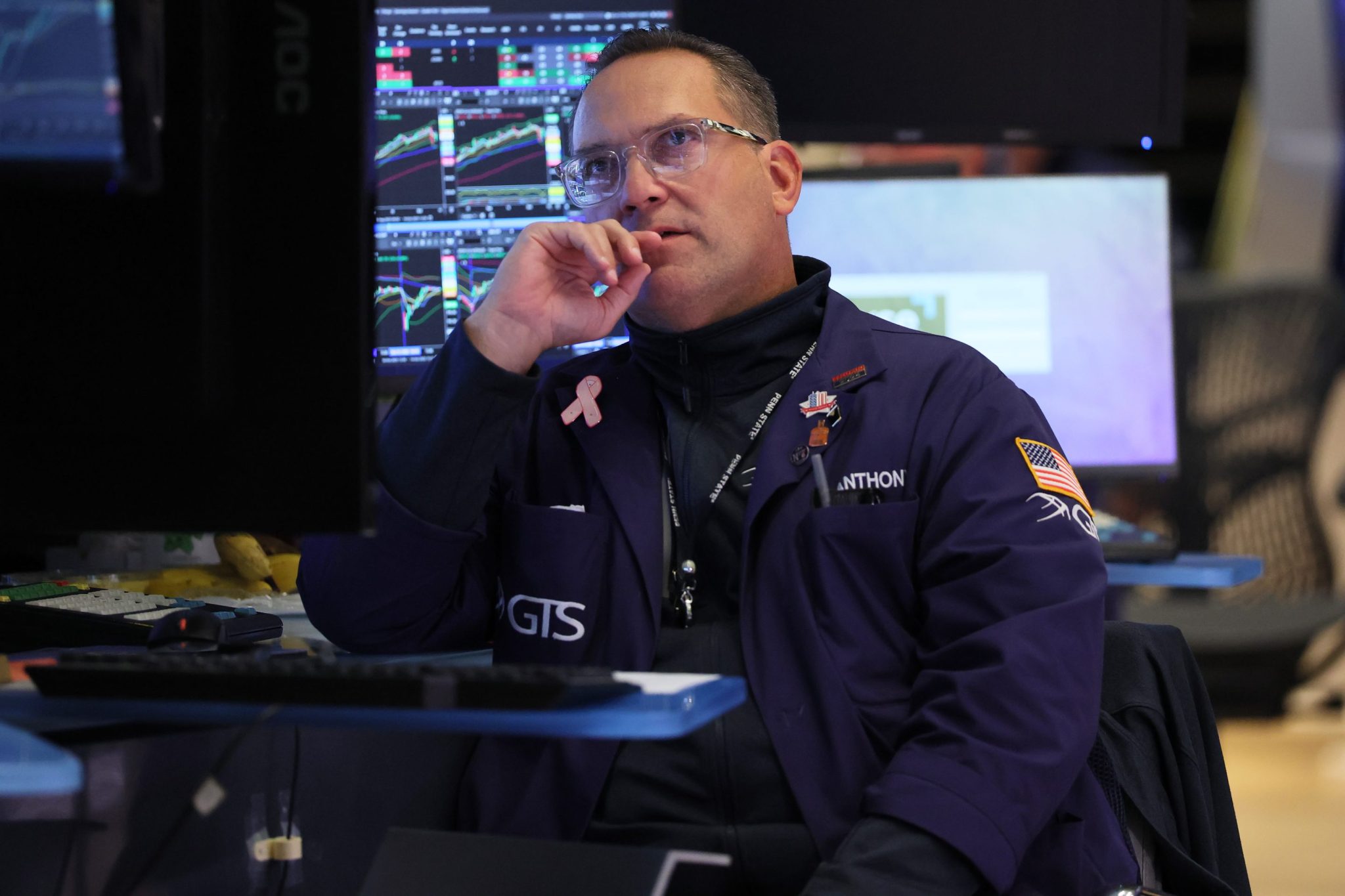
Bank of America Analysis has issued a recent warning for fairness traders: the S&P 500, now hovering close to historic highs, is demonstrating elevated danger ranges with 60% of the agency’s proprietary “bear market signposts” flashing purple—simply shy of the purpose that has traditionally heralded a market peak. The financial institution’s S&P 500 Relative Worth Cheat Sheet, printed Monday, mirrored rising warning among the many workforce led by Head of U.S. Fairness Technique Savita Subramanian.
Subramanian’s workforce argued that traders ought to be more and more selective, because the broad index has turn into “statistically costly on all the things.” All 20 of the valuation metrics tracked by her workforce are at costly ranges, and actually have by no means been dearer in a number of key areas, together with market cap to GDP. The S&P 500 can be buying and selling above its Tech Bubble ranges on 9 completely different metrics, Subramanian’s workforce famous.
BofA’s methodology tracks 10 alerts that are inclined to precede cyclical market tops. At the moment, six out of those ten are triggered, together with elevated price-to-earnings ratios, excessive outperformance of high-multiple shares in comparison with cheaper ones, and loosening credit score situations. Traditionally, main market peaks have occurred when roughly 70% of those indicators had been triggered, making in the present day’s 60% worryingly shut. In response to BofA’s strategists, these “bear market signposts — the triggers that sometimes precede an S&P 500 peak — counsel extra warning.”
Subramanian is much from the one analyst urging warning. Morgan Stanley Wealth Management CIO Lisa Shalett told Fortune earlier this month she was involved a few “Cisco second,” like when the dotcom bubble burst and that inventory misplaced 80% nearly in a single day. She highlighted that synthetic intelligence (AI) has nearly a complete grip on the S&P 500, accounting for 75% of positive factors, 80% of earnings and 90% of capex for the reason that rally of the previous few years started. She added she isn’t involved in regards to the subsequent 9 months, per se, however “very involved” about what comes after that.
BofA’s semiconductors analyst Vivek Arya was extra sanguine, arguing to Fortune that firms are extra anxious about sustaining 2025’s strong capex ranges than about an imminent downturn. Nonetheless, Arya mentioned he was assured about each the subsequent 12 months and the subsequent 5 years, however “can there be intervals of digestion in between? Yeah.”
Market drivers and rising dangers
The brand new BofA report additionally highlights attainable cracks beneath the market’s floor. Whereas latest positive factors have been propelled by resilience in mega-cap tech shares and the enduring energy of the U.S. shopper, strategists warn that these drivers may very well be at odds. For instance, synthetic intelligence—one of many market’s hottest themes—may cut back demand for skilled companies, doubtlessly impacting an space that has pushed a lot of the consumption development for the reason that Nineteen Eighties.
Subramanian previously told Fortune that she sees AI as key to resolving the well-known “productiveness paradox” recognized by Nobel laureate Robert Solow: the concept that computer systems are seen in every single place, besides in productiveness statistics. She mentioned she’s seeing hints in information going again to roughly 2022 that S&P 500 companies have realized work tougher and smarter, usually changing individuals with course of. “A course of is sort of free and it’s replicable for eternity,” she mentioned, including it’s a extra advanced story than AI displacing employees, however a basic shift in how enterprise is being performed.
Nonetheless, she warned in October that dangers are mounting within the quickly evolving world of personal lending. Because the 2008 monetary disaster, non-bank lenders have supplanted conventional banks, and instability in personal credit score may pressure pension funds and different massive traders to promote S&P 500 index funds, doubtlessly exacerbating volatility. The domination of passive investing additional will increase issues—ought to these asset homeowners flip to promoting, liquidity within the S&P 500 may dry up with alarming velocity.
Subramanian spotlighted the AI sector, writing that “AI funding has fashioned a Gordian [sic] knot involving mega caps, switch funds, even the US authorities,” referring to the famous legend about how Alexander the Great was confronted with a knot so tangled that he had no level besides to chop by means of it with a sword. The U.S. authorities’s involvement with taking an fairness stake in Intel, as an example, and Nvidia’s centrality to the story, had been different allusions. Subramanian mentioned that is “not a danger in itself however a complicating issue.”
October’s surprising U.S. authorities shutdown and renewed commerce tensions with China have added fog to an already hazy macroeconomic atmosphere, slowing each mission planning and financial exercise. BofA additionally factors to a file 54% of traders who now imagine that AI shares are in a bubble, in accordance with its most up-to-date International Fund Supervisor Survey—another excuse for heightened vigilance across the market’s uneasy exuberance.
As traders stare down a market the place euphoria and actual danger stroll hand-in-hand, BofA’s 60% bear signpost warning serves as a well timed reminder: cycle tops might solely turn into apparent in hindsight, however the flashing danger alerts are right here now.
