


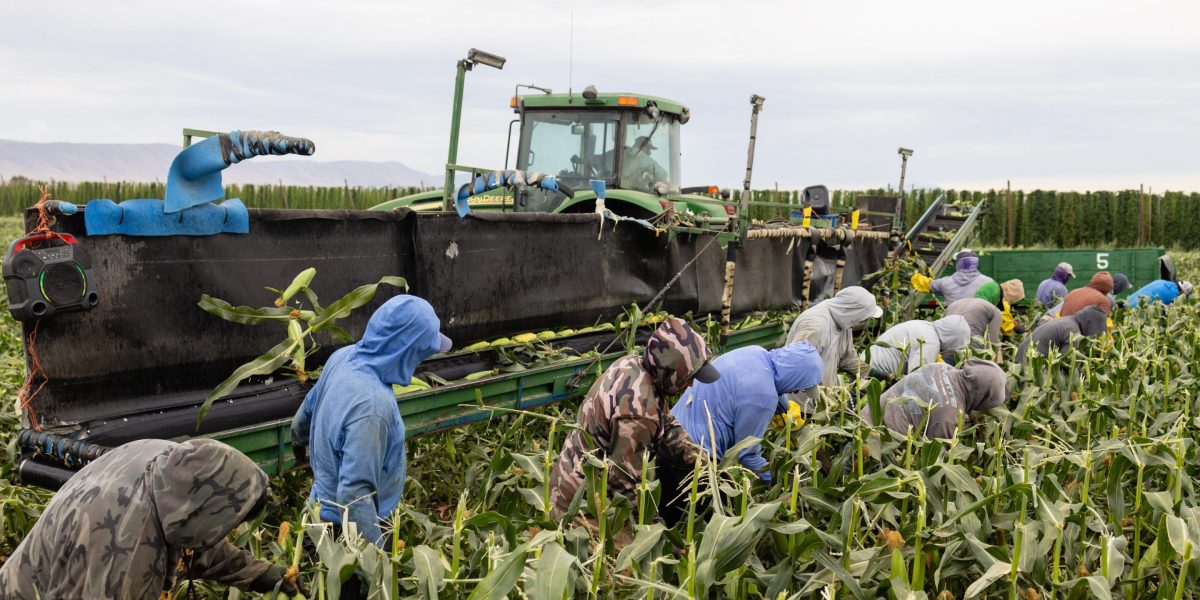
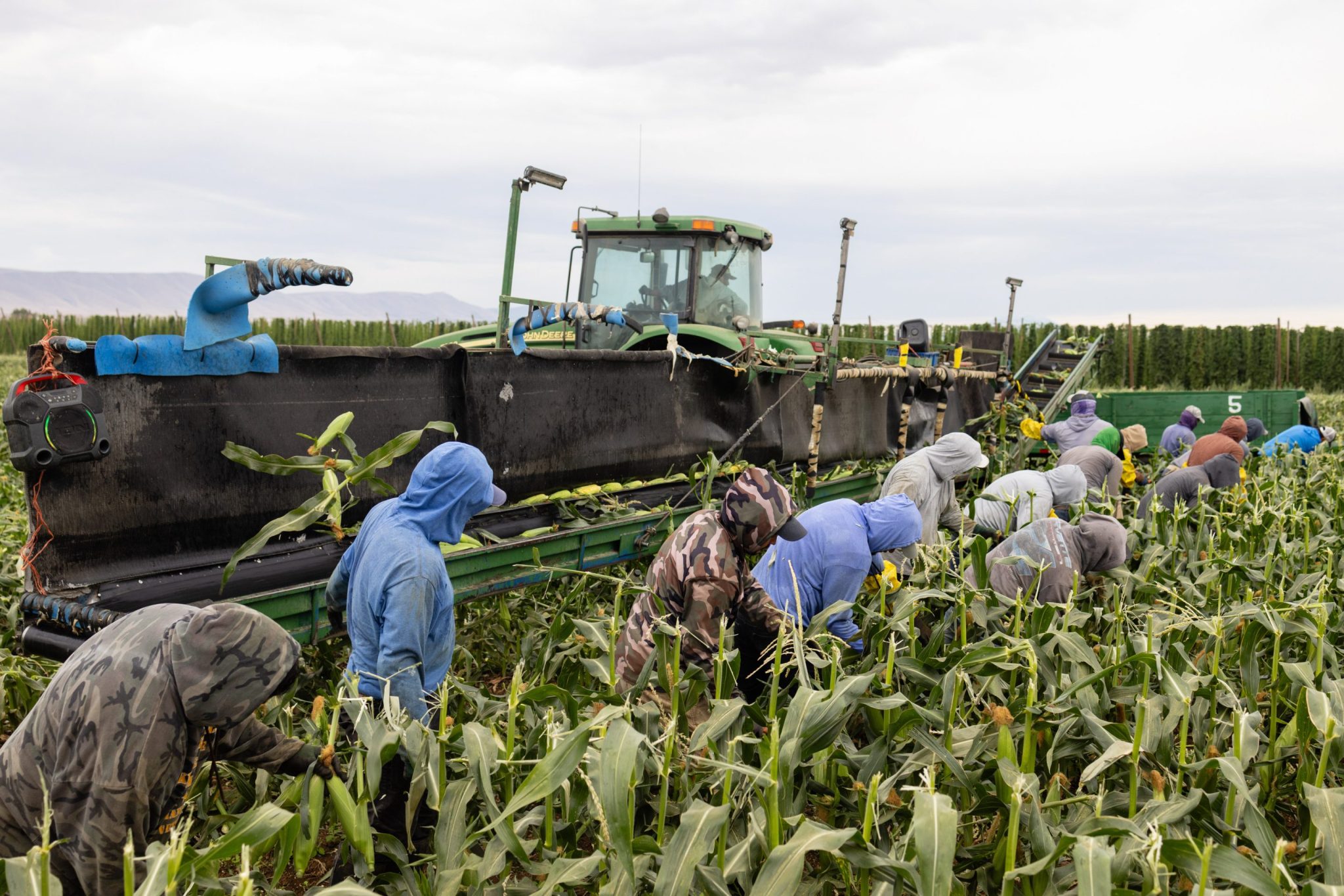
The Trump administration quietly issued a dire warning in regards to the president’s immigration crackdown, admitting that it dangers meals shortages and that American staff won’t step as much as fill labor wants.
The startling acknowledgment was buried in an Oct. 2 filing in the Federal Register to clarify a brand new rule that will decrease wages beneath the H-2A visa program, which permits U.S. corporations to usher in overseas nationals for momentary agriculture jobs.
As first reported by the American Prospect, the Labor Division stated “the present and imminent labor scarcity exacerbated by the close to complete cessation of the influx of unlawful aliens, elevated enforcement of current immigration legislation, and world competitiveness pressures described under, presents a enough danger of provide shock-induced meals shortages to justify rapid implementation” of the rule.
It added that the dearth of undocumented and documented staff “leads to important disruptions to manufacturing prices and threatening the steadiness of home meals manufacturing and costs for U.S customers.”
On the identical time, the Labor Division’s submitting additionally admitted that Individuals usually are not keen to switch undocumented farmworkers.
That’s regardless of a pointy slowdown within the total labor market in current months with hiring coming to a close to standstill as Trump’s aggressive tariff regime raises prices and creates uncertainty for companies.
In the meantime, Agriculture Secretary Brooke Rollins has vowed that the U.S. agricultural workforce will turn out to be “100% American” because of the immigration crackdown.
However the Labor Division sees issues a lot otherwise.
“As well as, the Division doesn’t consider American staff at the moment unemployed or marginally employed will make themselves available in enough numbers to switch giant numbers of aliens not getting into the nation, voluntarily leaving, or selecting to exit the labor drive because of the self-perceived potential for his or her removing based mostly on their unlawful entry and standing,” the submitting within the Federal Register stated.
Based on the Census Bureau, foreign-born staff made up lower than 19% of the U.S. labor drive in 2023 however accounted for 38% of jobs in farming, fishing and forestry. The Federal Register submitting steered that share is larger, estimating that 42% of the U.S. crop workforce is unable to enter the nation, faces potential deportation, or is leaving the U.S.
The Labor Division additionally acknowledged that agricultural work is among the many most bodily demanding and unsafe occupations within the U.S., requiring guide labor, lengthy hours, and publicity to excessive climate.
The division added that its expertise with the H-2A visa program demonstrates “a persistent and systemic lack of enough numbers of certified, eligible and American staff to carry out the varieties of labor that agricultural employers demand.”
The Labor Division didn’t instantly reply to a request for touch upon Saturday. However a senior administration official told the Washington Post that Trump is “strengthening the farm workforce and bettering H-2A and H-2B visa applications” whereas additionally “imposing the legislation and prioritizing fixing applications farmers and ranchers depend on to provide the most secure and most efficient meals provide on this planet.”
Amid backlash from the agriculture and hospitality industries, Trump ordered a pause to immigration raids on these staff in June however then quickly flip-flopped.
The dearth of immigrant staff represents one other headwind hitting the agriculture economic system, which has been affected by decrease crop costs and excessive enter prices for the final three years.
And extra not too long ago, Trump’s commerce conflict has prompted China to carry off on shopping for any U.S. soybeans, inflicting farm teams to plead with the administration to achieve a commerce deal that unlocks orders as harvest season begins.
The Labor Division cited research which have discovered that even a ten% lower within the agricultural workforce may end up in a 4.2% drop in fruit and vegetable manufacturing and a 5.5% decline in farm income.
“U.S. agricultural employers want a authorized and steady workforce to help their farming operations, and chronic labor shortages and will increase in manufacturing prices will solely hurt U.S. competitiveness, threaten meals manufacturing, drive up shopper costs, and create instability in rural communities,” the submitting stated.
