


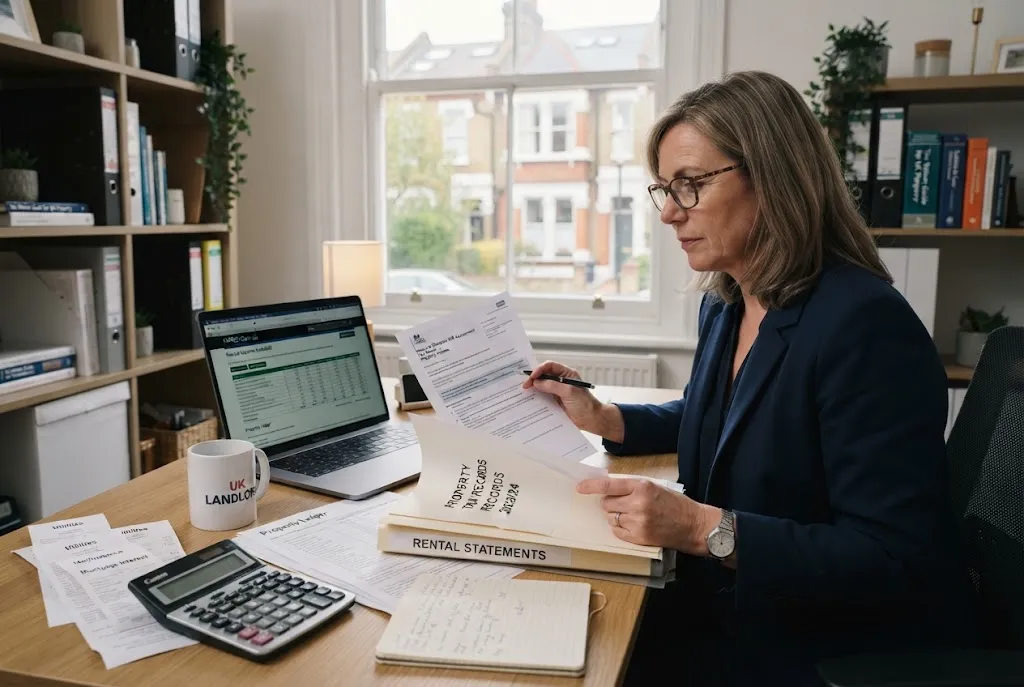
Understanding the landlord tax penalty UK rules is important for anyone earning rental income from property. Landlords can face penalties when they fail to report taxable rental income, submit a required Self Assessment return late, pay tax after the deadline or fail to meet certain record-keeping obligations. The amount and type of penalty depend on the circumstances and the particular tax obligation involved.
For landlords, tax compliance starts with accurately reporting rental income and keeping appropriate records. HM Revenue & Customs (HMRC) provides specific rules for property income, Self Assessment filing and late payment. Knowing these requirements can help landlords avoid unnecessary costs and respond appropriately if a penalty notice is received.
What Is a Landlord Tax Penalty in the UK?
A landlord tax penalty is a financial charge that HMRC may impose when a landlord fails to meet a tax obligation. The issue could involve submitting a tax return late, paying tax late, failing to notify HMRC when required or failing to keep the records required by law.
Not every landlord automatically needs to complete a Self Assessment return. HMRC currently states that individuals with property rental income may need to report it depending on the amount of income and allowable expenses. For example, property income above certain thresholds can trigger a Self Assessment reporting requirement.
Once a landlord has a reporting obligation, missing the relevant deadline can result in penalties even if the landlord eventually submits the return.
HMRC Landlord Tax Rules and Self Assessment
Landlords who personally own UK rental property generally need to consider whether their property income must be reported to HMRC. The current HMRC guidance states that the first £1,000 of property rental income may fall within the property allowance, subject to the applicable rules.
Where property income exceeds HMRC’s reporting thresholds, a landlord may need to register for Self Assessment and submit a tax return. HMRC currently states that if a person does not usually send a tax return and needs to report rental income, they generally need to register by 5 October following the relevant tax year.
Failure to register or notify HMRC when required can create additional compliance issues. Landlords should therefore establish their reporting obligations as soon as they begin receiving taxable rental income rather than waiting for a reminder from HMRC.
When Can a Landlord Receive a Tax Penalty?
There are several situations where a landlord may face a tax penalty. The most common include:
- Submitting a Self Assessment return after the deadline
- Paying a tax bill late
- Failing to notify HMRC of a tax liability when required
- Failing to keep appropriate tax records
- Providing inaccurate information in circumstances where a penalty applies
- Failing to comply with certain digital reporting obligations when those obligations apply
The exact penalty depends on the obligation that was missed. A landlord should therefore read the wording of an HMRC penalty notice carefully rather than assuming that every penalty follows the same calculation.
Late Self Assessment Penalty for Landlords
One of the most familiar forms of landlord tax penalty UK taxpayers encounter is the late Self Assessment filing penalty.
Under the current Self Assessment penalty rules, a return filed late can initially attract a £100 penalty. Further penalties can arise when the return remains outstanding for longer periods.
HMRC currently explains that additional daily penalties of £10 per day can apply after three months, subject to a maximum of £900. Further tax-geared penalties can arise after six months and again after 12 months.
This means that delaying a return can make the cost substantially higher than the original fixed penalty. Landlords should therefore submit an overdue return as soon as possible instead of waiting for HMRC to send further notices.
What Happens If a Landlord Pays Tax Late?
Late filing and late payment are separate issues. A landlord can submit a tax return on time but still receive a penalty if the tax due is not paid by the applicable deadline.
HMRC’s Self Assessment guidance explains that late payment penalties can apply when tax remains unpaid. Interest may also be charged on the outstanding amount.
The precise late-payment regime can depend on the taxpayer’s circumstances and the rules applying to the relevant liability. HMRC has also introduced changes to late-payment penalties for Income Tax Self Assessment as taxpayers become subject to the Making Tax Digital regime.
Landlords should therefore distinguish between the date a return is filed and the date the associated tax liability is actually paid.
How Much Is a Landlord Tax Penalty UK?
There is no single penalty amount that applies to every landlord. The charge depends on the type of failure, how long the failure continues and the tax rules applicable to the obligation.
For a late Self Assessment return, the initial penalty can be £100, followed by further penalties if the return remains outstanding. Late payment can create separate charges and interest.
For example, a landlord who files a return late but pays the tax on time may face a different penalty position from someone who both files late and leaves the tax unpaid.
This is why landlords should identify the specific reason for the penalty before calculating what they owe.
Failure to Notify HMRC About Rental Income
A landlord who becomes liable to tax may have an obligation to notify HMRC. Failing to notify HMRC when required can result in a penalty, particularly where the taxpayer later has unpaid tax.
HMRC explains that a failure-to-notify penalty can be based on the amount of tax that remained unpaid and the circumstances surrounding the failure.
This is particularly relevant to landlords who start receiving rental income but have never previously completed a tax return. Assuming that HMRC will automatically know about a new rental property can create avoidable compliance risks.
What If a Landlord Has Unreported Rental Income?
Landlords who discover that rental income from previous years has not been reported should not simply ignore the issue. HMRC provides a route for landlords to disclose previously undeclared rental income.
HMRC’s current guidance explains that landlords can tell HMRC about unpaid tax on rental income from previous years. Where a penalty applies, voluntary disclosure can result in a lower penalty than waiting for HMRC to discover the undeclared income itself.
This does not mean that every disclosure will eliminate a penalty. The outcome depends on the circumstances, including the nature of the failure and the taxpayer’s behaviour.
Landlords who discover historic errors should therefore consider obtaining appropriate tax advice before submitting a disclosure.
Landlord Tax Penalties for Poor Record Keeping
Accurate records are an important part of complying with property tax rules. HMRC says landlords should keep details of the dates properties are let, rental income, income from services provided to tenants, receipts, invoices, bank statements and allowable expenses.
Records can be especially important when HMRC asks a landlord to support figures included in a tax return.
A landlord who cannot produce appropriate records may face additional compliance problems, and HMRC can charge penalties for failures to keep or retain records where the relevant legal requirements apply.
Good record keeping also helps landlords identify legitimate expenses. Our guide to landlord tax deductions explains the main categories of property expenses that landlords should consider when preparing their rental income calculations.
Can HMRC Penalise a Landlord for an Incorrect Tax Return?
An incorrect tax return does not automatically mean that a penalty will be charged. However, penalties can apply where inaccuracies meet the relevant statutory conditions.
The circumstances can include the nature of the error, whether reasonable care was taken, whether the taxpayer disclosed the error and other factors considered under HMRC’s penalty rules.
This is another reason why landlords should avoid guessing when completing property income calculations. Where the tax treatment of an expense, finance cost or property transaction is unclear, obtaining professional advice can help reduce the risk of submitting incorrect information.
Can a Landlord Appeal an HMRC Tax Penalty?
In some circumstances, a landlord can appeal against a Self Assessment penalty. HMRC provides an appeal process for taxpayers who disagree with a late filing or late payment penalty.
A reasonable excuse can be relevant when appealing certain penalties. HMRC considers whether the circumstances prevented the taxpayer from meeting the deadline and whether the taxpayer took reasonable action to comply as soon as possible.
Examples of circumstances that may potentially be considered include serious unexpected events or other situations outside the taxpayer’s reasonable control. However, having a difficult or inconvenient situation does not automatically guarantee that an appeal will succeed.
Landlords should explain the circumstances clearly and provide supporting evidence where appropriate.
What Should You Do After Receiving an HMRC Penalty Notice?
If HMRC sends a penalty notice, the first step is to establish exactly what the penalty relates to. Check the tax year, the obligation involved, the deadline that HMRC believes was missed and the amount being charged.
Next, check whether the underlying tax return or payment has already been completed. In some cases, a landlord may have misunderstood which obligation the notice relates to.
If the penalty is correct, paying it within the required period can prevent additional consequences. If the landlord believes the penalty is incorrect or has a reasonable excuse, the relevant appeal process should be considered.
Ignoring the notice is generally not a useful approach. If the underlying tax liability remains unpaid, interest and additional penalties may continue to apply.
How Landlords Can Avoid Tax Penalties
Preventing a landlord tax penalty UK problem is usually easier than dealing with one after a deadline has been missed. Landlords can establish a simple compliance system around several key steps.
- Keep rental income records throughout the year.
- Keep invoices and receipts for property expenses.
- Monitor Self Assessment registration requirements.
- Record important tax deadlines in advance.
- Set aside funds for expected tax liabilities.
- Review mortgage interest and finance costs separately.
- Check tax returns carefully before submission.
- Respond promptly to HMRC correspondence.
- Seek professional advice when the tax position is complicated.
Landlords can also review their wider landlord tax advice requirements when their portfolio, rental income or personal circumstances change.
Making Tax Digital and Landlord Tax Compliance
Landlords should also be aware of the introduction of Making Tax Digital for Income Tax. HMRC’s published timetable provides that qualifying landlords and other taxpayers with qualifying income above £50,000 will enter the regime from the 2026 to 2027 tax year, with the threshold reducing to £30,000 from the 2027 to 2028 tax year.
Under Making Tax Digital, affected landlords will need to keep digital records and follow the relevant digital reporting requirements.
HMRC states that UK property income and expenses must be included in the digital records where the landlord is within the applicable Making Tax Digital rules.
This makes organised digital bookkeeping increasingly important for landlords with income above the relevant thresholds.
Landlord Tax Penalty and Rental Property Records
A reliable record-keeping system can make a major difference to tax compliance. Landlords should record rent received, dates of letting, property expenses and relevant supporting documents as transactions occur.
It is useful to keep separate records for different categories of expenditure, such as repairs, insurance, agent fees, professional costs and finance costs. This makes it easier to prepare a tax return and identify unusual transactions.
Landlords with several properties should also maintain a clear overview of their UK property business. HMRC’s guidance explains that UK properties owned by an individual are generally treated together as one UK property business for these purposes.
When Professional Landlord Tax Advice May Help
Professional advice can be useful when a landlord has several properties, substantial borrowing, historic undeclared rental income, complicated expenses or questions about a penalty notice.
An adviser can help review the underlying property income calculation, identify potentially allowable expenses, understand finance-cost rules and assess the appropriate response to HMRC correspondence.
It can be particularly important to obtain advice where a landlord is considering a voluntary disclosure or appealing a significant penalty.
Final Thoughts on Landlord Tax Penalty UK Rules
The landlord tax penalty UK rules cover several different types of tax compliance failure. Late Self Assessment returns, late tax payments, failure to notify HMRC and inadequate record keeping can all create potential problems, although the precise penalty depends on the circumstances.
The best way to reduce the risk is to report rental income correctly, maintain appropriate records, monitor deadlines and deal promptly with HMRC correspondence.
Landlords who discover an error should not assume that ignoring it will make the issue disappear. Early action can provide more options, particularly where previously undeclared rental income needs to be disclosed or a penalty needs to be challenged.
As property tax rules and digital reporting requirements continue to develop, landlords should regularly review their compliance arrangements and seek professional advice where their circumstances require more detailed consideration.
