

Residential property management covers the ongoing operation, administration and maintenance of houses, flats and other residential rental properties. It can involve tenant communication, rent administration, inspections, repairs, contractor coordination, record keeping and support with legal and regulatory responsibilities.
For a landlord managing one property, these tasks may be relatively straightforward. However, the workload can become much more demanding when an owner has several properties, lives away from them or does not have the time to deal with tenants and maintenance personally.
Professional residential management can provide a structured way to handle these responsibilities. The exact service varies between providers, so landlords should understand what is included before appointing a residential management company.
This guide explains how residential property management works in the UK, what services may be included, how professional managers support landlords and what to consider when choosing a management provider.
What Is Residential Property Management?
Residential property management is the professional or owner-led process of overseeing residential property after it is being operated as a rental or managed residential asset.
The work can cover individual houses, flats, apartments and larger residential developments. Depending on the arrangement, management may begin with preparing a property for occupation and continue through tenant communication, maintenance, inspections, rent administration and the eventual end of a tenancy.
A residential property manager normally acts according to instructions from the property owner or another responsible party. Their authority should be clearly defined, particularly when it comes to repairs, contractor appointments, expenditure and tenancy-related decisions.
For a broader explanation of the industry, our guide to property management covers the wider principles of managing property in the UK.
What Does Residential Property Management Include?
The services offered by residential management companies differ, but a full management package can cover many of the routine responsibilities associated with rental property.
Tenant Communication
Communication with tenants is one of the most visible parts of residential management. A manager may respond to questions, communicate important information, arrange access for contractors and coordinate responses to maintenance reports.
A dedicated contact can be particularly useful for landlords who do not want to deal with routine tenant queries themselves. It can also provide tenants with a clear route for reporting issues.
Rent Collection and Administration
Some residential property management companies collect rent and maintain payment records on behalf of landlords. Depending on the service, the manager may monitor payments, identify arrears and provide regular statements to the property owner.
Landlords should check whether rent collection is included in the quoted management fee or charged separately. The agreement should also explain how arrears will be handled and when the owner will be contacted about payment problems.
Repairs and Maintenance
Maintenance is a central part of keeping residential property in good condition. Tenants may report problems involving plumbing, heating, electrical equipment, appliances, doors, windows or other parts of the property.
A manager can receive the report, assess the appropriate response, contact a contractor and keep track of the repair. Some managers also carry out routine inspections to identify maintenance issues before they become more serious.
Owners should establish a clear spending limit for repairs. For example, a management agreement might allow the manager to authorise routine work up to an agreed amount while requiring the landlord’s approval for larger expenses.
Property Inspections
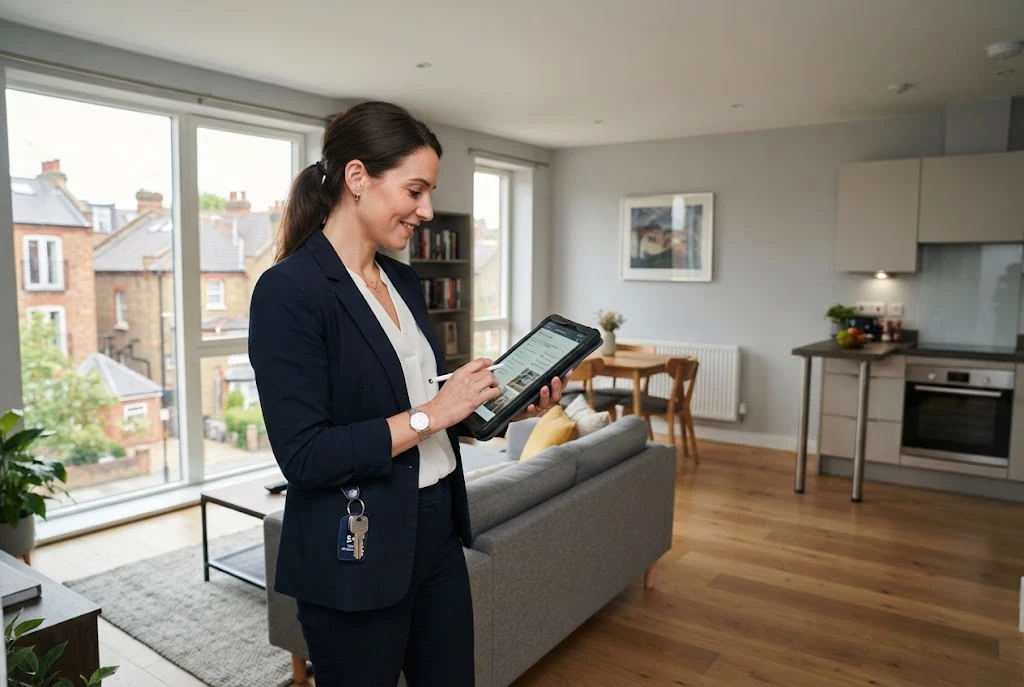
Inspections provide landlords with information about the condition of their properties. A residential property manager may arrange inspections, record observations and identify maintenance or management issues that require attention.
Access must be handled in accordance with the applicable tenancy arrangements and legal requirements. GOV.UK states that tenants generally have the right to live in their rented property undisturbed and that landlords normally need to give at least 24 hours’ notice for inspections or repairs, except in emergencies. GOV.UK’s private renting guidance provides further information.
Contractor Management
Residential properties frequently require specialist contractors. A management company can coordinate plumbers, electricians, heating engineers, cleaners, gardeners and other professionals as required.
Good contractor management involves more than simply arranging appointments. A professional process should record the issue, work required, costs, completion status and any follow-up action.
Residential Property Management and Landlord Responsibilities
Using a management company can reduce the day-to-day workload, but landlords should understand that appointing a manager does not automatically remove every responsibility from the property owner.
GOV.UK states that landlords must keep rented properties safe and free from health hazards and meet requirements relating to gas and electrical safety, energy performance certificates, deposit protection and other areas. Different rules apply in Scotland and Northern Ireland.
This means the management agreement should clearly explain who is responsible for arranging inspections, certificates, repairs, notices and other compliance-related tasks.
Where an agent is responsible for particular compliance activities, the landlord should still maintain suitable oversight and records. Clear delegation can reduce confusion when a deadline, repair or legal requirement needs attention.
Residential Property Management in England After the Renters’ Rights Act
Landlords and residential management companies in England also need to account for the changes introduced by the Renters’ Rights Act. The government’s landlord guidance confirms that important changes came into effect on 1 May 2026. These include changes to tenancy arrangements and the way landlords manage private rented properties.
For new tenancies created from 1 May 2026, landlords must also provide tenants with specified written information about key terms. GOV.UK states that this information must be provided before the tenancy is agreed and that failure to provide required information can result in enforcement action.
This makes accurate administration increasingly important. A professional residential management company should have processes for keeping tenancy records, notices and communications aligned with the rules that apply to the property.
Because the legal position differs across the UK, landlords should make sure their manager understands the jurisdiction in which each property is located.
Residential Management Companies for Rental Properties
Residential property management companies provide different levels of service. Some specialise in individual rental homes, while others manage larger portfolios, apartment buildings or residential developments.
A landlord should not assume that two residential management companies offering a “fully managed” service provide exactly the same package. One provider might include inspections and rent collection as standard, while another could charge separately for certain services.
Before making a decision, compare:
- management fees;
- tenant communication arrangements;
- rent collection services;
- inspection frequency;
- maintenance procedures;
- contractor arrangements;
- financial reporting;
- emergency response procedures;
- compliance support; and
- additional administration charges.
Looking at the complete service rather than the headline fee can make comparisons more meaningful.
Residential Management Company vs Self-Management
Landlords generally have two broad options: manage the property themselves or appoint a professional provider.
Self-management gives the owner direct control. The landlord can communicate directly with tenants, select contractors and decide how issues are handled. For an owner with one nearby property and sufficient time, this approach may be practical.
Professional management transfers agreed responsibilities to a manager. This can save time and create a more structured process for dealing with maintenance, tenant communication and administration.
The best option depends on the landlord’s circumstances. Location, portfolio size, available time, property complexity and willingness to handle tenant issues can all influence the decision.
Benefits of Professional Residential Property Management
Professional management can provide several practical benefits when the service is well organised.
Less Day-to-Day Administration
Landlords do not have to personally respond to every routine query or arrange every contractor appointment. This can be particularly valuable when an owner has a busy schedule.
Centralised Communication
Tenants have a dedicated contact for many management matters. This can make it easier to report maintenance issues and receive updates.
Maintenance Coordination
A management company can coordinate contractors, arrange access and keep records of outstanding repairs. This can be useful for landlords who live in another town or region.
Portfolio Scalability
Managing several properties creates more administration than managing one. Professional systems can make rent records, maintenance requests, inspections and communications easier to organise as the portfolio grows.
Structured Reporting
Many professional managers provide landlords with financial statements and property updates. Clear reporting can help an owner understand what is happening without being involved in every operational detail.
How Much Does Residential Property Management Cost?
There is no universal price for residential management. Fees depend on the property, location, number of units, services provided and management arrangement.
Some companies charge a percentage of collected rent, while others use fixed fees or combine a management charge with separate costs for particular services.
Landlords should ask for a complete fee schedule before signing a contract. Important questions include whether the quoted price covers inspections, maintenance coordination, rent collection, tenancy administration and emergency services.
It is also worth asking whether the company adds contractor mark-ups or administration charges to maintenance work. Understanding the complete cost structure can prevent unexpected expenses later.
How to Choose Residential Property Management Companies
Choosing between residential property management companies should involve more than comparing prices. The quality of communication, maintenance processes and reporting can have a significant effect on the owner’s experience.
Look at Relevant Experience
Choose a provider with experience managing properties similar to yours. A company experienced with single-family rental homes may have a different operating model from one specialising in apartment blocks or large residential developments.
Check the Management Agreement
The agreement should identify the services provided, fees, responsibilities, termination arrangements and authority given to the manager.
Pay particular attention to clauses covering repairs. You should know when the manager can instruct a contractor without approval and when they must contact you first.
Assess Communication
Ask how tenants contact the company and how landlords receive updates. Find out whether you will have a dedicated property manager and how urgent issues are escalated.
Check Redress Arrangements
For qualifying property managers operating in England and Wales, membership of an approved redress scheme is an important consideration. GOV.UK states that letting agents and property managers in England and Wales must join an approved redress scheme where the relevant requirements apply. The current approved schemes listed by the government are The Property Ombudsman Limited and the Property Redress Scheme.
Checking a provider’s redress arrangements is a useful part of due diligence before entering into a management agreement.
Ask About Client Money Protection
If a residential management company holds client money in England, client money protection requirements can apply. GOV.UK states that letting or property management agents in the private rented sector in England must join a client money protection scheme when they hold clients’ money.
Landlords should therefore ask whether the company handles rent or other client funds and, if so, what protection arrangements are in place.
Residential Property Management for Blocks and Developments
Managing an individual rental property is different from managing a block of flats or residential development.
Block management can involve communal areas such as corridors, entrances, staircases, gardens, lifts and other shared facilities. It may also require coordination between freeholders, leaseholders, residents, contractors and other parties.
In these situations, the manager may have responsibilities beyond an individual tenancy. The management arrangement should clearly define who is responsible for maintenance, insurance, communal services, contractor appointments and financial administration.
Owners and residents looking for a residential management company should therefore ask whether the provider has relevant block or development management experience rather than assuming that all residential managers offer the same expertise.
Residential Property Management in London
London has a large and varied residential property market, ranging from individual rental flats and houses to large apartment developments. This creates demand for different forms of residential management.
London residential management can be particularly useful for landlords who own property in the capital but live elsewhere. A local manager may be able to coordinate inspections, contractors and tenant communication without requiring the owner to travel to the property.
However, landlords should avoid choosing a provider simply because it uses London-focused branding. Look for evidence of relevant local experience, transparent fees, responsive communication and suitable management processes.
For landlords with properties specifically in the capital, the wider property manager guide can also help explain the role and responsibilities of the individual managing the property.
Questions to Ask a Residential Management Company
Before appointing a provider, ask practical questions about how the service will operate.
- Who will manage the property on a day-to-day basis?
- How will tenants report repairs?
- How quickly are maintenance requests normally acknowledged?
- What qualifies as an emergency?
- What repair value can be approved without landlord permission?
- How often are inspections carried out?
- Are inspection reports included in the management fee?
- Is rent collection included?
- How are arrears handled?
- How are contractors selected?
- Are contractor or administration mark-ups applied?
- How often will financial statements be provided?
- What compliance services are included?
- What happens if the management agreement is terminated?
- Which redress scheme does the company belong to?
- If client money is held, which protection scheme covers it?
Clear answers to these questions can make it easier to compare providers and identify the service that best fits your requirements.
What Good Residential Property Management Looks Like
Effective residential management is built around consistency, communication and accountability. Tenants should know how to report problems, landlords should receive useful information, and maintenance issues should be tracked until they are resolved.
Good managers also maintain clear records. Property information, tenancy documents, inspection reports, maintenance histories, financial statements and compliance records should be organised and accessible to the appropriate parties.
Responsiveness matters too. Not every issue requires an immediate emergency response, but tenants and landlords should understand how urgent problems are prioritised and communicated.
Finally, transparency should be a core part of the relationship. Owners should understand fees and responsibilities, while tenants should receive clear information about the management process and their rights.
Final Thoughts on Residential Property Management
Residential property management brings together the practical and administrative tasks required to operate rental homes and residential developments effectively. From tenant communication and repairs to rent administration, inspections and compliance support, the responsibilities can be substantial.
For some landlords, self-management remains the right choice. For others, professional residential management provides valuable time savings and a more structured way to operate their property portfolio.
The most important step is to choose a provider based on the actual service rather than simply the advertised management fee. Review the agreement carefully, understand maintenance and communication procedures, check relevant regulatory arrangements and make sure the manager has experience with the type of residential property you own.
With clear responsibilities and good communication between the owner, manager and tenant, professional residential management can help make property ownership more organised and manageable over the long term.
