


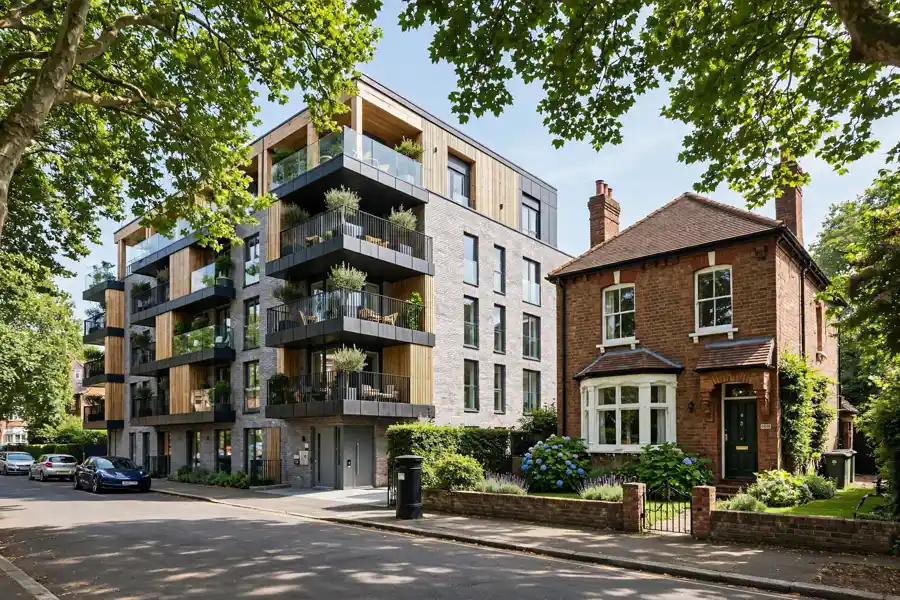
If you are buying a home in England or Wales, one of the first things to check is whether the property is leasehold or freehold. The difference affects what you own, what you pay each year, and what you can do with the property. This guide explains leasehold vs freehold in plain terms, so you can compare the two with confidence before you buy.
What Freehold Means
When you buy a freehold property, you own the property and the land it stands on outright, with no time limit on your ownership. You are responsible for maintaining the building and the land, and you generally do not pay ground rent or service charges to a landlord. Most detached houses are sold as freehold. The freedom is real, but so is the responsibility: repairs, insurance, and upkeep are all yours, and there is no managing agent to share the load. For many buyers, that control is exactly the appeal.
What Leasehold Means
When you buy a leasehold property, you own the right to live in the property for the length of the lease, while the freeholder owns the land and the building structure. Leases run for a fixed term, often many decades, and the lease sets out what you pay and what you must do. Most flats are leasehold, because shared buildings need a single owner responsible for the structure and common areas. Leaseholders usually pay an annual ground rent to the freeholder and a service charge covering maintenance, insurance, and management of shared areas. Our guide to leasehold management explains how these arrangements work in practice and what to check in the lease.
Key Differences at a Glance
The practical differences come down to ownership, costs, and control. A freeholder owns outright and answers to no landlord, but carries all maintenance costs alone. A leaseholder buys a time-limited interest and shares building costs with other leaseholders through service charges, while the freeholder or managing agent handles the structure and common parts. Leaseholders may also need the freeholder’s permission for alterations, subletting, or keeping pets, depending on the lease terms. Neither tenure is automatically better: a well-managed leasehold flat can be an excellent home, while a freehold house with serious repair needs can be expensive to run.
What to Check Before Buying Leasehold
Lease length matters. A lease with many decades remaining is generally straightforward, while a short lease can affect mortgage availability and resale value, and extending it costs money. Ask for the ground rent terms, the recent service charge history, any planned major works, and whether the lease restricts how you use the property. A solicitor should review the lease in full before exchange, not just summarise it. Costs beyond the purchase price also deserve attention: stamp duty rules depend on the property and the buyer, so read our stamp duty land tax advice alongside any leasehold purchase.
What to Check Before Buying Freehold
Freehold buyers should focus on the condition of the property and the land. A full survey is worth the cost, particularly for older houses, and you should check boundaries, rights of way, and any shared access arrangements. If the property is part of a managed estate, there may still be an annual estate charge even though the home itself is freehold, so ask about that early. Management of the wider area matters too: our overview of property management and residential property management shows what professional management covers when it applies.
Lease Extensions and Buying the Freehold
Leaseholders have options if the lease term becomes a concern. In many cases you can extend the lease by negotiating with the freeholder or following a formal statutory route, and flat owners acting together can sometimes buy the freehold of their building outright. Both routes involve professional costs and a price for the additional years or the freehold itself, so take specialist advice and get a proper valuation before starting. The process takes time, so it is better to address a shortening lease early rather than waiting until it affects a sale or a mortgage application. A solicitor experienced in leasehold work can explain which route fits your building and your budget.
Comparing the Annual Costs
Annual costs look different under each tenure. Freeholders pay for their own maintenance, insurance, and repairs directly, which means quiet years cost little but a new roof or major repair can be a large one-off bill. Leaseholders pay ground rent and service charges each year, which smooths building costs but adds a regular outgoing that can rise over time, especially if major works are planned. When comparing two homes, ask for several years of service charge history for leasehold properties, and budget a realistic annual maintenance allowance for freehold ones. The cheapest home to buy is not always the cheapest home to own, and the full yearly picture is what matters for your budget.
Leasehold vs Freehold: Which Suits You?
Choose freehold if you want full control, are comfortable handling maintenance yourself, and are buying a house. Consider leasehold if you are buying a flat, value shared building management, and are happy with the lease terms and charges after a careful review. In both cases, the documents matter more than the label: read the lease or title, check the costs, and take professional advice before committing. Investors sometimes hold property through a company, which adds another layer to consider, so our guide to buying property through a limited company is worth reading if that route interests you. Understanding leasehold vs freehold properly is one of the simplest ways to avoid an expensive surprise after you move in.
